
How Arrest Warrants Work in Henry County
Indiana law sets a firm gate first. Under Indiana Code Title 35, a warrant follows an indictment or a judge's probable-cause finding tied to a filed information. Probable cause means a factual basis to believe an offense occurred and that the named person committed it. Three Henry County courts issue criminal orders. Henry Circuit Courts 1, 2, and 3 share that docket. The current Henry local rules route misdemeanors to Circuit Court 3, assign specified Level 6 felonies between Courts 2 and 3, and divide Level 1 through 5 felonies between Courts 1 and 2. The routing here is exact. The case number and court code settle it. Those details, not a guess based on the charge, show which court owns the Henry County warrant record.
Henry County's Statutory Warrant Gate
Indiana law sets the gate. Indiana Code 35-33-2-1 separates an arrest warrant from a mere allegation. A judge must find probable cause after an information is filed, unless an indictment supplies the basis. Indiana Code 35-33-2-2 then governs the formal instrument. A Henry County docket may list the charge, the judicial finding, and the warrant event as separate entries.
- Information
- A formal charging paper filed by the prosecutor.
- Probable cause
- Facts sufficient for a judge to authorize arrest, not a conviction.
- Indictment
- A grand jury's formal accusation, which can support issuance.
- Return
- The service outcome reported back to the issuing court.
Read the full event trail. One old entry does not state today's status.
Arrest Warrants: What They Contain
A neutral Henry County warrant check looks at fields, not at a person's published details. Indiana law requires identifying and command information. The public summary shows part of the warrant. Court access rules can redact protected information from the case view.
| Case and court | An Odyssey code such as 33C01, 33C02, or 33C03 links the order to its court file. |
|---|---|
| Legal basis | The information, indictment, offense, count, and Indiana Code citation. |
| Issuance | Date, county, and signature or title of the judge or clerk. |
| Command | Direction to arrest and bring the person before court, with direction to the sheriff. |
| Bond | Bail amount or a hearing or no-bond condition, when public. |
| Later events | Service return, appearance, bond, recall, quash, or disposition. |
The signed Henry County arrest warrant controls, and no general bail schedule can override its terms.
Search Henry County Criminal Cases
Start with Indiana MyCase when you know a case, citation, cross-reference number, or party name. This is a case search. It is not a warrant-only database. Choose a Henry County court in the Court filter, then read the header and the chronological summary.
- Use the exact case number when possible; hyphens and leading zeros are not required.
- For a name search, add first or middle name and birth date only in the official system.
- Check open and closed results, since a closed case can contain a past warrant event.
- Look for issuance, arrest return, appearance, bond, recall, or quash entries.
- Confirm the current result with the Henry County Clerk's Office or issuing court.
Read the Indiana Judicial Branch warrant FAQ before trusting a blank search. MyCase may show a public warrant signal. It does not search all Indiana arrest warrants, so a Henry County lookup can still miss one.
How Warrants Get Served in Henry County
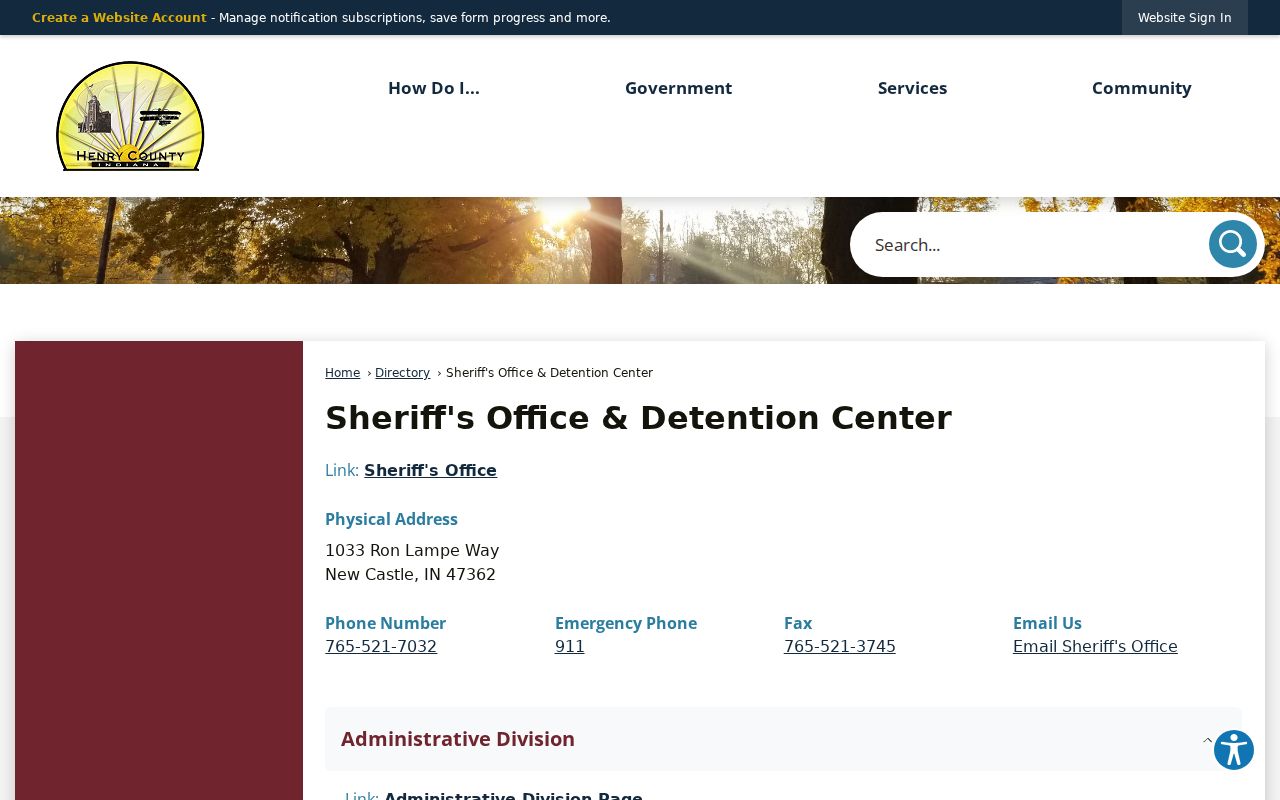
The court issues the warrant. The Henry County Sheriff's Office and Detention Center receives it and carries out service. The office sits at 1033 Ron Lampe Way, New Castle, with main number 765-521-7032. The Jail Division lists 765-529-4901. These are general lines, not a dedicated warrant desk. Use this contact route for Henry County service and custody questions.
Henry County service questions go to law enforcement, while judicial-status questions belong to the issuing court. An arrest may follow. Service can produce an arrest return, booking, initial appearance, and bond event. Another agency can serve it too. The county publishes no service-status dashboard, warrant unit page, or universal surrender procedure. So call first. The sheriff cannot recall or quash the judge's order. For a sheriff-held record, use the official sheriff records request form and describe a particular case, date range, or event. A focused request still cannot unlock sealed or investigatory material.
Henry County Court and Sheriff Roles
The split prevents a common mistake. A jail call may answer a custody question, but it is not court clearance. A clerk can explain record and filing logistics. Legal advice is another matter. The judge alone decides whether a Henry County arrest warrant is recalled, quashed, modified, or left in force.
| Channel | Best question | Limit |
|---|---|---|
| Issuing court or Clerk | Docket, hearing, filing, recall, or order | No legal advice |
| Sheriff or Jail | Service, receipt, custody, or booking | Cannot change court order |
| MyCase | Public case and event review | Not a full warrant search |
If the answers conflict, go to the issuing court's current signed record for the true Henry County judicial status.
Henry County Arrest Warrants Compared
An arrest warrant, a summons, and a bench warrant can all appear in one Henry County criminal file, yet they do different work. A summons directs a person to appear. It does not authorize an immediate arrest. A bench warrant is a court-issued arrest order in a civil or criminal proceeding, often tied to a missed duty.
| Feature | Arrest warrant | Summons | Bench warrant |
|---|---|---|---|
| Command | Arrest and bring before court | Appear as directed | Arrest under court order |
| Basis | Indictment or probable cause | Charge without initial custody | Missed appearance or duty |
| Response | Confirm, seek counsel, plan appearance | Attend by stated date | Ask court about recall and bond |
A search warrant is different again, since it authorizes a search and may stay sealed in Henry County before execution.
Henry County Arrest Warrant Events
A Henry County case history is a sequence of events, not a badge reading active or cleared. Issuance may be followed by a sheriff return. Then an initial hearing, bond, recall, or quash. Recall and quash both name the court action that withdraws the operative order. A case's end may not explain every earlier warrant event. The local bail schedule sets default amounts for many criminal levels, but it has exceptions and lets the signed warrant or order control. Multiple charges may be cumulative. Some cases require a hearing. No official source lists universal bond-window hours, accepted payment methods, or one place where all bond is posted.
Key point: Ask the court and sheriff or jail about current bond and appearance instructions before traveling to a Henry County office.
Henry County Warrant Access Limits
Indiana leans toward openness. Its Rules on Access to Court Records presume the public can see most case files, though certain material stays protected. Juvenile records, sealed or expunged files, protected-person information, confidential-informer material, and some pre-execution search-warrant details can all be withheld. So a blank result may just mean the record is off limits. It does not prove the warrant is absent. On the agency side, the Indiana Access to Public Records Act, Indiana Code 5-14-3, covers sheriff and other office records, and law-enforcement investigatory files may be withheld too. When a Henry County sheriff file mixes public and exempt pages, partial release with redaction is sometimes possible. Ask the Clerk for court records. Ask the sheriff for what his office holds.
Handling an Arrest Warrant in Your Name
Gather your facts first. That means the case number, the court, the warrant event, the next date, and any bond line. Then call the issuing court and ask what filing, appearance, or hearing process applies to a Henry County warrant. For surrender or custody logistics, the sheriff or Jail Division can give current details. Henry County publishes no countywide safe-surrender docket, walk-in recall counter, or same-day promise. A lawyer can weigh whether a motion to recall or quash, a planned appearance, or a bond hearing fits the case. Do not assume payment, age, or the word "closed" ends an active warrant. Get an explicit court event or clerk confirmation. If you are helping a relative, keep private details off public posts.
Act carefully: Confirm the court, seek legal advice, and arrange surrender, bond, or recall steps before an unexpected law-enforcement contact.